Oakley WTR Icon
Best big wave

| Pros | Cons |
|---|---|
| Designed for surfing | Slides back unless fit dial is set crazy tight |
| Highly protective EPP liner | Not enough size options |
| Plenty of holes for water to flow through | Water drips in eyes |
| Fastening fit dial | Big gaps in the liner |
| 4-star white water rated by Virginia Tech’s Helmet Lab |
Recommendation: The Oakley WTR Icon Helmet performs well thanks to its fit dial, and protects even better. It’s the first ever hard shell helmet designed for surfing - with a highly protective EPP liner like many bike and snow helmets to boot. It’s my go-to helmet when the waves get big.
Available directly from Oakley or Check the price on Cleanline Surf.
Review
Performance
You can tell that the Oakley WTR Icon went through a lot of testing with actual surfers as soon as you put it on. It feels advanced, and it doesn’t disappoint in the water as long as you can achieve a decent fit. They certainly did a great job designing a helmet that is light, that you can hear through and that penetrates the water such that you may even forget that it is there. However, the problem is that because this helmet is designed like most EPP and EPS ski, snowboard, and bike helmets whereupon the hard shell is molded into a shape that is designed to universally fit most head shapes, it is very hard to achieve the ideal fit for surfing.

Basically, what works in these other helmet categories - because the ideal fit is really not necessary - does not work all that well in surfing where the helmet needs to be snug at all parts of your head and relatively thin profile to perform well.

To make matters worse, it only comes in 3 sizes, so you could be left with large gaps in certain areas - between your head and the helmet - even while in other areas, it is snug. While surfing it, I actually found myself tightening and loosening the fit dial almost constantly. Any time a set would come I would tighten it to the point that it is uncomfortable, and after I would paddle back out, I would loosen it again. This is because, to prevent the helmet from sliding back while taking a fall or duck diving big sets, the fit dial needs to be insanely tight. I literally fasten it so tight that I would probably get a headache in 10 minutes.
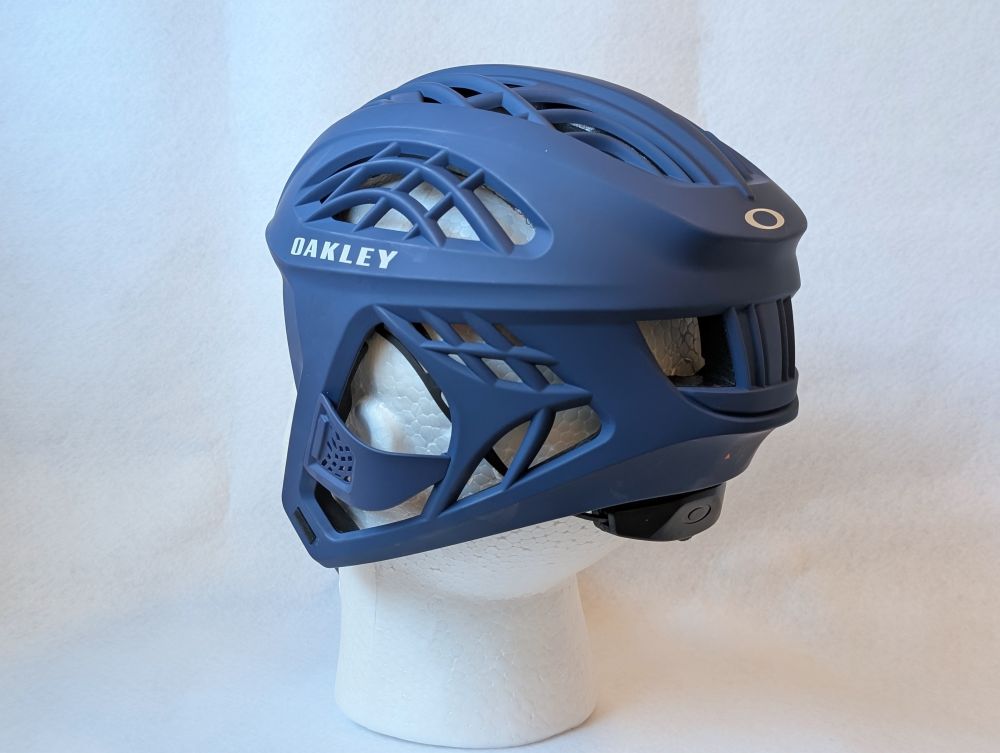
 Discovering all this, it is no surprise that you see this thing sliding back during CT events or otherwise looking huge on surfers heads. It is also a hard shell, and despite the universal fit systems best efforts, if your skull is irregularly shaped, you may not be able to fit comfortably into the smallest size helmet that would otherwise fit your head.
Protection
You’ll notice that I didn’t mention D3O in the pros and cons list. We will get to that later. Let’s first review what’s great about the protection this helmet offers. As the first hard shell surf helmet designed specifically for surfing, this is a truly innovative piece of protective gear. Featuring EPP as the primary protective material, this helmet is multi-impact rated with impact absorbing potential that far outstrips even the most advanced non-newtonian foams at the same thickness. It’s why EPP, especially multi-density EPP, has quickly become the liner of choice in most ski, snowboard and bike helmets. On the Oakley WTR Icon, the layer of EPP is fairly thin. It has to be to achieve good performance, minimizing some protective ability, but it is thick enough regardless to achieve 4 stars in the white water helmet category of the Virginia Tech Helmet Lab. The only surf helmet to achieve over 3 stars in this category (remember my critical review of Gath and Simba and their use of EVA? Both achieved only one star).
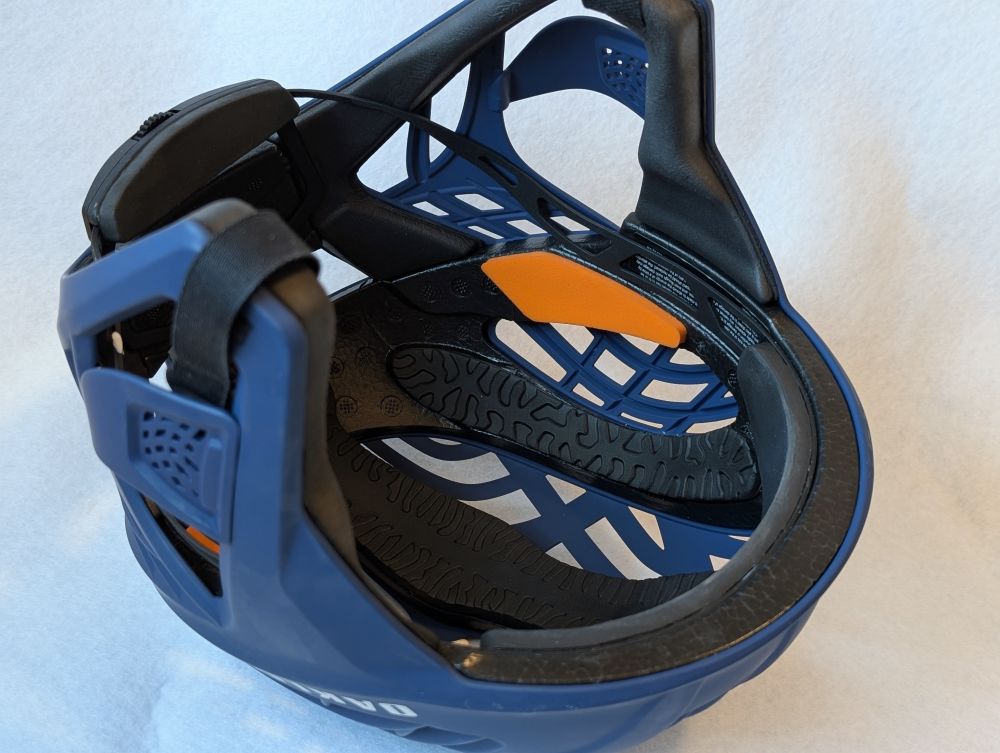
Now, let’s get to the downsides of the design. Those are the extremely large gaps in the liner and all contours and holes that whatever is impacting your head could get caught on. Some people may think that the hard shell is going to protect you from impacts between those large gaps, but that’s probably only true in lab testing environments. Not in jagged reefs and possibly even high velocity impacts with fins. That’s because although the shell is made out of high quality ABS plastic, sharp objects at high velocity can easily penetrate thin layers of ABS - especially 3D printed ones. More importantly though, the EPP is only going to absorb that impact if said object doesn’t reach your head first. Worse yet, such jagged pieces of reef or fin could grab the helmet for even a fraction of second, which would actually increase the rotational forces to your head. Helmets need to act as low friction surfaces to provide adequate protection. The Oakley WTR Icon is not that helmet; it clearly sacrifices the low friction aspect of highly-protective helmets for better water penetrating ability.

Finally, on to the D3O. I’m going to talk about this last in terms of protection because the only D3O in the helmet is not actually in the helmet or its liner. They’re the two orange pieces you see to provide a better fit. Personally, I felt like this was misleading advertising. The 5 star hockey helmets that incorporate D3O and advertise it, incorporate it into the liner itself. On the Oakley, these two, small pieces aren’t going to add much protective ability. All they are really going to do is absorb water during your session (yes D3O and most other non-newtonian materials absorb water, but they continue to test well even when wet). Foams like this need to be larger to absorb impact on any significant scale.

Conclusion
The Oakley WTR Icon Helmet performs well thanks to its fit dial, and protects even better. It’s the first ever hard shell helmet designed for surfing - with a highly protective EPP liner like many bike and snow helmets to boot. Despite some odd design choices that could effect its ability to protect your head in certain circumstances, it’s my go-to helmet when the waves get big.